Explore
What does onboarding mean? Process, examples and a checklist
Onboarding is what happens after hiring, until the person can deliver work on their own. 30-60-90 days, who owns what, and a practical list.
Published 21 August 20263 min read

Onboarding is the stretch after someone is hired, when they actually start work. The word comes from bringing a person on board: they are on the payroll; next they learn how the ship runs. In Turkish workplaces the same package is usually called orientation (oryantasyon). The two searches land on the same door. This article stays with how the English term is used in the work itself.
Onboarding is not recruiting. Recruiting ends at the advert, the interview, the offer and the contract. Onboarding starts after that. When the two are mixed up, HR says hiring is done and the manager says they are already at the desk, while the new person spends two weeks looking for someone to ask.
Is onboarding different from orientation
In most Turkish companies, in practice, no. The difference is which language people search in, and who is talking:
- HR and international teams say "onboarding"
- Field, plant and public-sector language says "orientation" or "işe alıştırma"
- Some consultants squeeze onboarding into 90 days and orientation into day one. That split is a useful calendar. It is not two products
This article calls the 90-day pack onboarding. Day one is still a piece of the pack. The pack is not day one.
How the process sits: 30, 60, 90
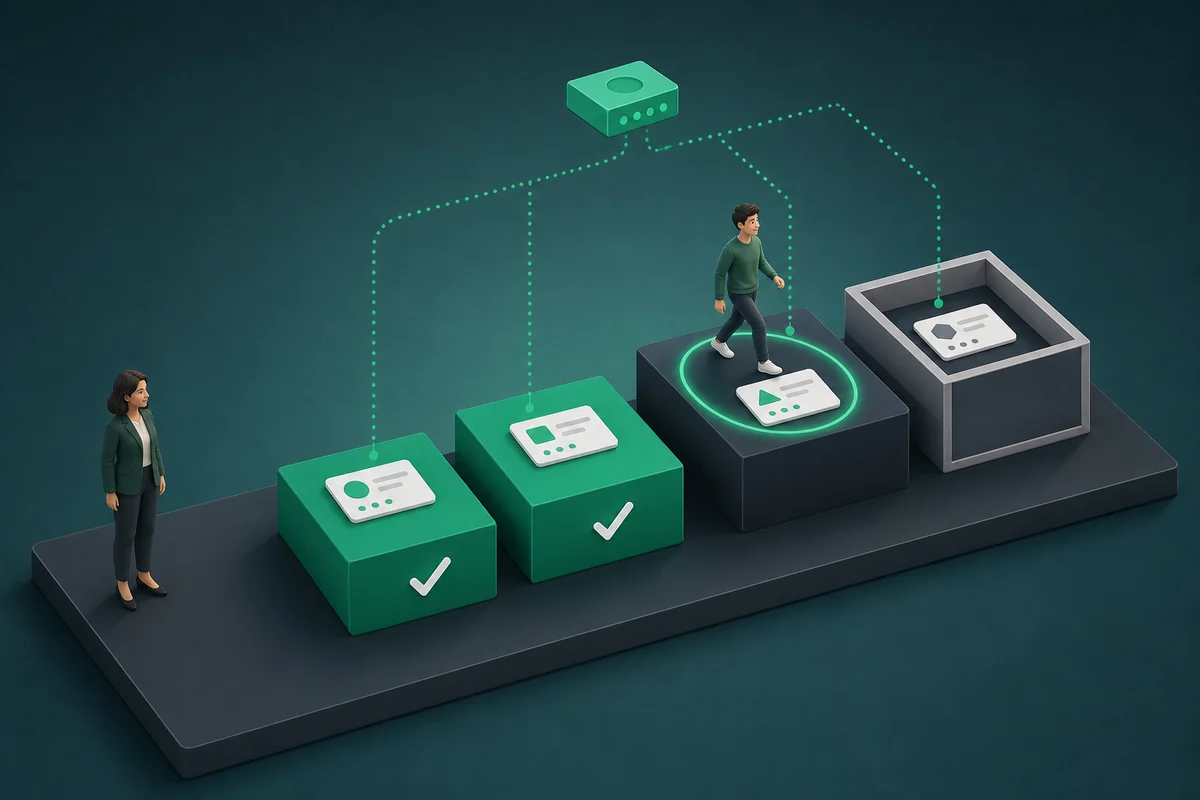
Onboarding that works is spread across three stops. It is not all crammed into one Monday.
First 30 days
Accounts, safety, the team, where the role sits. A small, real piece of work. By day 30 the person should be able to do the routine job without help. If they cannot, a tool is missing, an explanation is missing, or the job was never described. All three belong on the list.
Day 60
Common exceptions. The "ask X about this" list gets shorter. The person should not make the same mistake twice. A short conversation with the manager: what is stuck, which line is still open.
Day 90
The output the role was hired for. This is not a copy of the annual review form. The question is: if this person was hired for this seat, is the reason for hiring now visible?
Who carries what
Onboarding breaks most often on ownership.
HR carries accounts, paperwork, mandatory training and the list template. HR names the host.
The manager carries the first job, the quality bar and the feedback. If they say "HR will handle it" and do not speak for 90 days, the process is paperwork in HR's hands and a gap on the floor.
The new hire must be able to tick a line, or the list is a lie. "What today" has to be visible on their own screen.
Example: an office role, first two weeks
- Before day one: laptop, email, door, basic tools are open.
- Day 1: host, emergency exits, a "who do I ask" sheet.
- Days 2-3: team, customer, systems labelled "do not touch yet".
- Week 1: a small delivery. Fixing a record or reading a report is enough.
- Week 2: dates on mandatory training; the day-30 conversation is on the calendar.
In a field role the order changes: the safety walk comes forward, the customer briefing slides back. The template stays. The order is cut to the role. On learn.place that is the job of the employee onboarding scenario.
Checklist
The set below fits most seats. It can be shorter. Lines with no owner are deleted, not stretched.
- Hardware and accounts ready before day one.
- Host and backup named in writing.
- Safety walk recorded.
- Mandatory training assigned with a due date.
- Week-one small job described.
- 30 / 60 / 90 conversations on the calendar.
- Every open line shows whose job it is.
If the list sits on paper and nobody ticks it, there is no onboarding. A finished line carries a date and a person.
Run 30-60-90 onboarding from a ready programme
Go to the onboarding page